
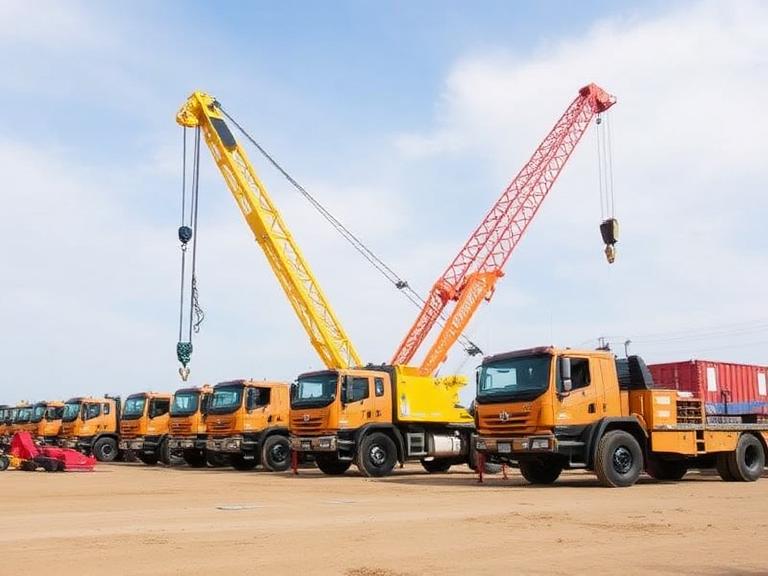
How to Choose the Right Truck Cranes for Your Construction Needs

Ever found yourself staring at a construction site, wondering which truck crane would get the job done without blowing your budget? Or perhaps you’ve been caught out before, hiring equipment that turned out to be completely wrong for the task at hand? Choosing the right truck crane isn’t just about picking the biggest one available, it’s about matching the machine to your specific project requirements.
Getting this decision right can make or break your project timeline and bottom line. The wrong crane means delays, safety risks, and unexpected costs that eat into your profits. On the other hand, selecting the perfect truck crane keeps your site running smoothly, your workers safe, and your clients happy.
In this guide, we’ll walk you through everything you need to know about selecting the ideal truck crane for your construction needs. From understanding the basics of how these machines work, to comparing hiring versus buying options, you’ll finish this article with the confidence to make a smart, informed decision. Whether you’re tackling a small residential build or a major commercial project, we’ve got you covered.
Understanding Truck Cranes: The Basics
What Is a Truck Crane and How Does It Work?
A truck crane is essentially a crane mounted on a truck chassis, giving you the flexibility to drive directly to your worksite and set up quickly. Unlike stationary cranes that require extensive assembly, truck cranes arrive ready to work within minutes of reaching your location.
The mechanics are straightforward. The crane uses a hydraulic system to extend its boom and lift heavy loads. Outriggers—those stabilising legs you see extending from the sides—keep everything steady during operation. The operator controls the boom’s movement, rotation, and lifting capacity from a cab positioned on the truck.
Different Types of Truck Cranes Explained
You’ll encounter several truck crane varieties in the Australian market. All-terrain cranes handle rough ground conditions brilliantly, making them ideal for remote sites. Rough terrain cranes are designed specifically for off-road work, while standard truck-mounted cranes excel on established roads and urban sites.
Boom trucks offer lighter lifting capacities but provide excellent reach for tasks like sign installation or tree removal. Loader cranes, mounted behind the truck cab, work perfectly for loading and unloading materials. Each type serves a specific purpose, so understanding your project’s demands is crucial.
Truck Cranes vs Mobile Cranes: What’s the Difference?
The terms often get used interchangeably, but there’s a distinction worth noting. Mobile cranes is the broader category—any crane that can move under its own power. Truck cranes fall within this category but specifically refer to cranes mounted on a truck undercarriage.
Crawler cranes, which move on tracks, are also mobile cranes but offer different advantages. Truck cranes win on speed and road travel, while crawler cranes excel in stability on soft ground. For most Australian construction projects, truck cranes provide the versatility and mobility that gets the job done efficiently.
Assessing Your Construction Project Requirements
What Size Truck Crane Do I Need for My Project?
Determining the right size comes down to three key factors: maximum load weight, required reach distance, and lift height. Start by identifying the heaviest single load you’ll need to lift. Then add a safety margin—typically 25%—to account for unexpected requirements.
Consider your lifting radius too. A crane’s capacity decreases as the boom extends further from the base. You might need a larger crane than expected if your lifts require extended reach.
Understanding Lifting Capacity and Load Charts
Load charts are your best friend when selecting a truck crane. These charts show exactly how much weight the crane can safely lift at various boom lengths and angles. Every manufacturer provides detailed load charts for their equipment.
Reading these charts correctly prevents costly mistakes. The rated capacity at minimum radius is always higher than at maximum reach. Factor in the weight of any rigging equipment, as this counts toward your total load. When in doubt, consult with experienced operators or crane hire companies who can help interpret these specifications.
Reach and Boom Length Considerations
Your boom length requirements depend on obstacle clearance and working radius. Need to lift materials over existing structures? You’ll require extra boom length. Working in tight spaces might actually benefit from a shorter boom with better manoeuvrability.
Telescopic booms offer adjustable reach, while fixed booms provide simplicity and reliability. Many modern truck cranes feature jib attachments that extend reach even further when needed.
Site Access and Ground Conditions in Australia
Australian construction sites vary dramatically—from inner-city Melbourne laneways to remote outback locations. Assess your site access carefully before selecting a crane. Narrow streets, overhead power lines, and weight-restricted roads all influence your choice.
Ground conditions matter equally. Soft or uneven terrain requires cranes with robust outrigger systems or all-terrain capabilities. Check bearing capacity before bringing heavy equipment onto your site to avoid costly ground damage or, worse, crane instability.
Key Features to Look for When Selecting a Truck Crane
Safety Features and Compliance Standards
Safety isn’t negotiable in construction. Look for cranes equipped with load moment indicators (LMIs) that prevent overloading. Anti-two-block systems stop the hook from colliding with the boom tip. Outrigger monitoring ensures proper setup before lifting begins.
All cranes operating in Australia must comply with Australian Standards and WorkSafe regulations. Verify that any crane you’re considering meets current certification requirements. Regular inspections and maintenance records should be readily available from reputable suppliers.
Manoeuvrability and Transport Regulations
Consider how the crane will travel between sites. Australian road regulations restrict vehicle dimensions and weights. Larger cranes may require permits for road travel, adding time and cost to your project.
Compact truck cranes navigate urban environments more easily and typically don’t need special transport arrangements. However, they sacrifice lifting capacity for convenience. Balance your mobility needs against lifting requirements.
Operator Comfort and Control Systems
Happy operators work more efficiently and safely. Modern truck cranes feature ergonomic cabs with excellent visibility, intuitive controls, and climate control systems—essential during Australian summers.
Advanced control systems include computerised load management, smooth hydraulic responses, and customisable operating modes. These features reduce operator fatigue and improve precision during complex lifts.
Fuel Efficiency and Running Costs
Fuel consumption impacts your project costs significantly. Newer crane models typically offer improved fuel efficiency through advanced engine technology and intelligent power management systems.
Beyond fuel, consider maintenance costs, spare parts availability, and service intervals. A slightly cheaper crane with expensive, hard-to-find parts could cost you more in the long run.
Buying vs Hiring: Which Option Is Right for You?
How Much Does It Cost to Hire a Truck Crane in Australia?
Hiring costs vary based on crane size, duration, and whether you need an operator. Small truck cranes might cost $200-400 per hour, while larger units can exceed $800 per hour. Daily and weekly rates often provide better value for extended projects.
Most hire rates include basic insurance but check what’s covered. Additional costs might include transport to site, operator wages, and rigging equipment. Always request detailed quotes from multiple suppliers to compare apples with apples.
When Does Purchasing Make Financial Sense?
Buying becomes economical when you’ll use the crane frequently—typically 60% or more of your working time. If you’re running consistent projects requiring similar lifting capabilities, ownership eliminates ongoing hire costs and availability concerns.
Consider also the convenience factor. Owning your equipment means it’s ready when you need it, without booking lead times or availability issues during busy construction seasons.
Long-Term Value and Depreciation Factors
Cranes hold their value reasonably well compared to other construction equipment. Quality brands with good maintenance histories command strong resale prices. However, depreciation affects your balance sheet, and capital tied up in equipment could potentially earn returns elsewhere.
Factor in storage, insurance, maintenance, and licensing costs when calculating true ownership expenses. Sometimes the numbers favour hiring, even for frequent users.
Top Truck Crane Brands and Models to Consider
Which Truck Crane Brand Is Most Reliable?
Several brands have earned strong reputations in the Australian market. Liebherr, Tadano, and Grove consistently rank highly for reliability and parts availability. Japanese manufacturers like Kobelco and Kato offer excellent build quality at competitive prices.
Australian dealer networks matter enormously. A brilliant crane becomes useless if spare parts take weeks to arrive. Choose brands with established local support infrastructure.
Comparing Popular Models for Australian Conditions
For general construction work, mid-range models like the Tadano GR-500EX or Grove GMK 3050-2 offer excellent versatility. Smaller projects might suit the Franna AT-20 or similar pick-and-carry models favoured across Australia.
Match the model to your typical work. Rough terrain? Look at all-terrain options. Primarily urban work? Compact carriers with good road speeds make sense.
Common Mistakes to Avoid When Choosing a Truck Crane
Don’t underestimate your lifting requirements—always build in a safety buffer. Avoid choosing based solely on hire cost; the cheapest option rarely delivers the best value. Never skip site assessments, as ground conditions can surprise even experienced operators.
Forgetting about transport regulations causes unnecessary delays and fines. Overlooking operator certification requirements creates legal liability. Finally, don’t neglect to verify insurance coverage—gaps in protection can prove catastrophically expensive.
Making the Right Decision for Your Business
Choosing the right truck crane starts with an honest assessment of your project needs, a careful evaluation of available options, and a realistic budget. The ideal crane should balance lifting capacity, reach, manoeuvrability, and cost-effectiveness to suit your specific project requirements.
Take time to consult with experienced crane operators and reputable hire companies. If you’re exploring truck cranes in Melbourne, speaking with local specialists can help you understand which equipment best fits your site conditions and lifting demands. Their practical insights often prove invaluable when making your final decision. Site visits before committing can also help identify potential challenges early.
Whether you decide to hire or buy, the right truck crane can make your construction project far more efficient and manageable. Do your research, ask plenty of questions, and evaluate your options carefully. Your future self—and your project budget—will appreciate the effort you invest today. Good luck with your next lift!