How to Choose a Privacy Fence That Looks as Good as It Performs

Most homeowners spend more time picking a paint color than they spend choosing their privacy fence. That’s a problem, because a fence lasts 10 to 25 years, costs several thousand dollars to install, and sits at the front of your property where everyone can see it every day. Getting it wrong is expensive and visible.
This guide walks through the material decisions, what performance specs to actually check, and the questions you should ask before signing anything.
What are the most common fence materials, and which holds up best?
The residential fence market is dominated by wood, vinyl, and aluminum, each with different tradeoffs on cost, appearance, and long-term maintenance.
Wood is the default in most neighborhoods. Cedar and pressure-treated options typically last 8 to 12 years structurally, but they start looking rough within a season or two. Grey weathering, warping, and cracked boards appear faster than most buyers expect. Maintaining a wood fence requires staining or painting every two to three years. Most homeowners either fall behind on the schedule or abandon it entirely, which accelerates deterioration.
Vinyl fences are marketed as low-maintenance alternatives, and they are in moderate climates. In regions with extreme temperature swings, particularly below -20°C, vinyl becomes brittle and can crack under impact. Quality varies considerably across the market. Cheaper imported products fade and warp on timelines that are shorter than their pricing implies. When vinyl fails, individual sections need full replacement because the material cannot be patched.
Aluminum fencing requires no painting, staining, or sealing. The material does not rust, rot, or absorb moisture. A properly installed aluminum fence looks the same after 20 winters as it did after two. For homeowners who want both appearance and durability without ongoing upkeep, it is the most practical option.
How do I evaluate fence quality before buying?
The gap between a well-made fence and a poorly-made one is not obvious from a photo. Here’s what to check:
Coating thickness and type: A three-layer coating system, with primer, base coat, and topcoat, holds color far longer than a single-coat finish. Ask specifically how the color was applied, not just what colors are available.
Panel construction: For privacy panels, foam-core construction adds structural rigidity and better thermal performance. This matters in climates with extreme cold or heat.
Wind load testing: Some manufacturers test their fencing to specific wind ratings. Products tested to 220 km/h have been through real stress testing. Vague marketing claims about “wind resistance” without test data are common and tell you nothing.
Fire rating: ASTM E84 Class A fire ratings, with a Flame Spread Index of 0 and Smoke Developed Index of 50, are third-party tested and verifiable. This rating matters near utility areas or in regions with fire risk.
Post burial depth: For Canadian and northern US climates, posts should go down at least 3 feet to sit below the frost line. Shallow installations heave over winter freeze-thaw cycles regardless of how good the fence itself is.
What should I look for in warranty terms?
Fence warranties vary significantly, and some are designed to be difficult to enforce. Common terms worth reading carefully:
Many warranties require annual professional inspections to remain valid. Others specify proprietary cleaning products or narrow windows for claim reporting. These conditions are often buried in the fine print. A warranty that looks generous on the surface may have nearly impossible conditions underneath.
Ask for the full warranty document before purchasing, not just the headline duration. Check: what voids coverage, what the claims process requires, and whether the company is the manufacturer or a middleman.
Reviewing privacy aluminum fence panels with tested wind and fire ratings is a good starting point. Manufacturers who publish verified test data tend to back their products with clearer warranty terms.
How do privacy fence designs affect appearance?
Full privacy panels with no gaps give complete sight-line blocking but can feel heavy from the street, particularly in front-yard applications. Semi-privacy designs use spaced slats that reduce visibility without fully closing off the property, which tends to look more proportionate on smaller lots.
Panel sizing affects installation flexibility. Standard residential fence panels run from 4 by 6 feet up to 8 by 8 feet. Custom sizing allows matching non-standard lot dimensions without the awkward partial panels that cut-to-fit approaches sometimes produce.
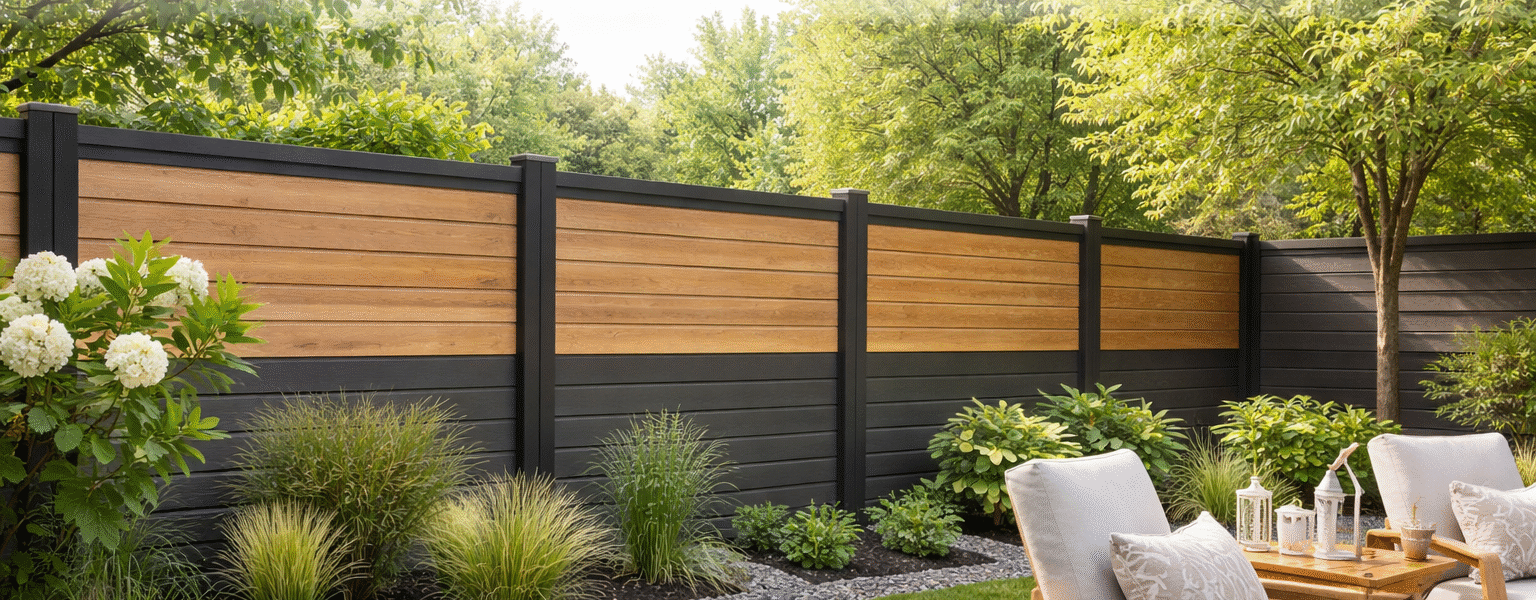
Finish colors now include realistic wood-grain patterns in aluminum, including natural walnut, grey walnut, dark walnut, and similar tones. These look like wood from a conversational distance while requiring none of its maintenance. For homeowners who want the aesthetic of wood without the upkeep, textured aluminum finishes are the practical answer.
How do I choose between privacy and semi-privacy fencing?
Privacy fencing makes sense for backyard applications where blocking sightlines from neighbors or adjacent properties is the goal. It works well around pool areas, patios, and outdoor entertaining spaces where you want separation from the street or neighboring yards.
Semi-privacy designs suit property lines, side yards, and front areas where full enclosure would feel too closed in. The spaced slat design lets light and air move through while still defining the boundary clearly.
For homes where the fence runs from front to back, a combination approach works well. Semi-privacy in the front yard transitions to full privacy panels in the backyard, which follows how most people actually use their outdoor spaces.
If you’re thinking about aluminum fence options, working through a supplier who can show you both configurations on your lot dimensions saves time and helps with the final decision. Aluminum fence options with verified performance data give you a clearer picture of what’s been tested versus what’s just marketing language.
Frequently Asked Questions
How long does a privacy fence typically last?
Material choice is the main driver. Aluminum fencing lasts 25 years or more with no maintenance required. Vinyl lasts around 10 years before cracking, fading, or warping becomes significant, with cheaper imported products showing problems earlier. Cedar and pressure-treated wood hold up structurally for 8 to 12 years, but look weathered and worn much sooner.
What is the best fence material for cold climates?
Aluminum outperforms both wood and vinyl in climates with extreme cold. It does not become brittle at low temperatures the way vinyl does, and it does not absorb moisture that freezes and splits wood. No additional treatment is needed before or after winter.
How much does a privacy fence cost to install?
Installed prices for residential privacy fencing in Canada typically run $80 to $120 per linear foot depending on material, height, panel style, and local labor costs. Wood may have a lower upfront price, but maintenance and early replacement costs add up over time.
What does the ASTM E84 fire rating mean for a fence?
ASTM E84 tests a material’s surface burning characteristics. Class A is the highest rating, with a Flame Spread Index of 0 and Smoke Developed Index of 50. It means the fence material does not contribute to flame spread, which is relevant near structures, utility corridors, or in fire-risk zones.
Do I need planning permission for a privacy fence?
Requirements vary by municipality. Most local building codes allow residential fences up to a certain height without permits, commonly 6 feet in backyard applications, but front yard and property-line rules differ. Check with your local planning department before installation.
How deep should fence posts be set?
For Canadian and northern US climates, posts should be set at a minimum of 3 feet deep to get below the frost line. Shallower settings allow frost heave to shift posts over multiple winters, which misaligns fence panels and weakens the structure over time.