Waterproof Shade Sails Built for Real Weather Conditions

The Australian climate is famous for being unpredictable. One minute the sun is beating down with intense UV radiation, and the next, a sudden squall rolls in, bringing heavy rain and wind. For homeowners who love the outdoor lifestyle—whether that means hosting a Sunday barbeque, parking the car in the driveway, or relaxing by the pool—this variability can be frustrating. You want to use your outdoor spaces year-round, not just when the forecast is perfect. This desire for all-weather protection has driven a surge in popularity for Waterproof Shade Sails. While standard shade cloth is fantastic for blocking the sun and cooling an area down, it lets the rain straight through. If you want a solution that keeps your furniture dry and allows you to finish your lunch during a summer storm, you need a different approach.
Upgrading to a waterproof system transforms a simple shade structure into a genuine architectural extension of your home. It creates a permanent outdoor room. However, dealing with water and wind requires a higher level of engineering and design than a porous cloth sail. Understanding these differences is the key to getting a structure that stands the test of time.
The Dual Challenge: Sun and Rain
In Australia, we often focus on UV protection because the sun here is so harsh. Standard knitted shade cloth works by absorbing and reflecting UV rays while allowing hot air to rise through the fabric weave. This keeps the area underneath cool.
Waterproof Shade Sails work differently. They are typically made from a high-quality PVC (Polyvinyl Chloride) tension membrane. This fabric is a solid barrier. It blocks 100% of UV rays and 100% of the rain.
Because the fabric does not breathe like a knitted cloth, it acts like a solid roof. This is excellent for keeping everything dry, but it also means the design must account for heat. If installed too low, heat can get trapped underneath. Therefore, professional designers often install waterproof sails higher off the ground to allow for cross-ventilation, ensuring the space remains comfortable even on a humid afternoon.
Why Engineering Matters More with Waterproof Fabric
The most critical aspect of installing Waterproof Shade Sails is the structural engineering. This cannot be overstated.
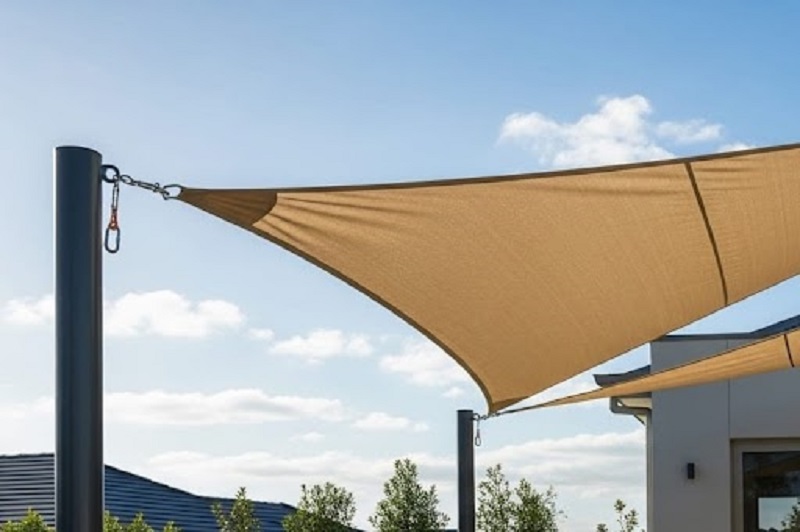
When the wind blows against a standard mesh sail, a significant amount of that wind passes through the holes in the fabric. With a waterproof PVC sail, zero wind passes through. The sail acts like a massive kite. The wind load (the force exerted on the sail) is transferred directly to the attachment points—the stainless steel shackles, the turnbuckles, and, most importantly, the posts.
Stronger Foundations
For this reason, the posts used for waterproof installations must be significantly stronger than those used for standard shade. We are talking about heavy-duty galvanized steel columns, often with a larger diameter and thicker wall.
The footings—the concrete foundations holding those posts in the ground—must also be deeper and wider. In many parts of Australia, specifically in wind-prone coastal areas or open plains, the engineering requirements are strict to ensure the structure remains safe during a storm. A failure to engineer the structure correctly can lead to posts bending or being pulled out of the ground entirely.
The Art of Drainage
Water is heavy. If you have ever held a bucket of water, you know the weight. Now imagine water pooling in the centre of a large sail during a torrential downpour. If that water cannot escape, it can accumulate hundreds of kilograms of weight in minutes. This is known as “ponding.”
Ponding is the enemy of Waterproof Shade Sails. It stretches the fabric, causing it to sag permanently. In severe cases, the weight can snap the stainless steel cables or collapse the structure.
To prevent this, the design must have significant “pitch” or slope. A waterproof sail cannot be installed flat. It requires a steep angle or a twisted “Hypar” (hyperbolic paraboloid) design to force the water to run off quickly. This is where professional design expertise becomes invaluable. A skilled installer knows exactly how to manipulate the height of the posts to create a shape that sheds water instantly while still looking aesthetically pleasing.
Material Choices for the Australian Market
Not all waterproof fabrics are created equal. In the Australian market, there are specific grades of PVC designed to handle our high UV levels.
Cheaper, imported vinyls often lack the necessary UV stabilizers. Under the Australian sun, these can become brittle, yellow, and crack within a few seasons. High-quality architectural PVC membranes are treated with specialized coatings (often acrylic or PVDF lacquers) that repel dirt and protect the base fabric from UV damage.
When you invest in quality Waterproof Shade Sails, you are looking for a material that is:
- Self-cleaning: The coating allows rain to wash away dust and bird droppings.
- Fire retardant: Essential for areas near BBQs or in bushfire-prone zones.
- Dimensionally stable: It won’t stretch out of shape after the first summer.
Applications for the Modern Aussie Home
The versatility of waterproof tension structures allows them to replace traditional timber or steel pergolas in many situations.
Carport Alternatives
Building a solid timber garage or metal carport can be expensive and may require complex planning approvals. A waterproof sail offers a stylish alternative. It protects your vehicle’s paint from sun damage, tree sap, and hail, while keeping you dry when you are unloading the groceries in the rain.
Alfresco Dining
Extending your living area is a major trend. By covering a patio or deck with a waterproof membrane, you guarantee that your dinner party can go ahead regardless of the weather. It protects outdoor kitchens, timber decking, and furniture from the elements, reducing maintenance.
Pool Areas
While standard shade cloth is common over pools, some homeowners opt for waterproof options to create a designated “dry zone” by the poolside for lounging. However, care must be taken with design to ensure rainwater runoff does not flood the pool with dirty water from the sail.
Navigating Regulations and Permits
In Australia, the rules regarding permanent outdoor structures vary from council to council. Because Waterproof Shade Sails are solid structures that can affect wind flow and visual amenity, they often face stricter regulations than permeable shade cloth.
Building Permits
In many municipalities, a waterproof sail is classified similarly to a solid roof pergola. You may need a building permit. The council will look at:
- Site coverage: How much of your land is covered by roofed structures.
- Setbacks: How close the structure is to the boundary fence.
- Drainage: Where the water runoff is going. You cannot simply dump hundreds of litres of rainwater into your neighbour’s yard. You may need to install a gutter system on the low edge of the sail or direct the runoff into a garden bed with adequate drainage.
Working with a reputable provider like Shadewise helps navigate this red tape. Professional companies can provide the engineering drawings and wind ratings required for council applications.
Cleaning and Maintenance
While these structures are built to be tough, they are not maintenance-free. To keep the PVC looking fresh, it needs occasional cleaning. Unlike shade cloth which hides the dirt, a solid PVC surface can show dust and grime over time.
Cleaning is usually done with a soft-bristled broom and a mild detergent solution, followed by a hose down. High-pressure washers should be used with caution as they can damage the protective coating on the fabric. Furthermore, the tension of the sail needs to be checked annually. The turnbuckles may need tightening to ensure the surface remains “drum tight” to prevent water pooling.
Questions and Answers: Common Questions About Waterproof Shade Sails in Australia
Q: Can I attach a waterproof shade sail to my house fascia?
A: Generally, no. The fascia board (the timber or metal board that holds your gutters) is not strong enough to handle the immense wind load of a waterproof sail. The wind force can rip the fascia off the house, damaging the roof. We usually install roof brackets that anchor deep into the structural trusses of the house, or we use independent steel posts.
Q: Do waterproof sails trap heat?
A: They can if the design is poor. Because the hot air cannot escape through the fabric, it can pool underneath. The solution is height. By installing the sail high off the ground and ensuring open sides, we create cross-ventilation. This allows the breeze to blow the hot air away, keeping the area cool.
Q: How steep does the angle need to be for drainage?
A: As a general rule of thumb in the industry, we look for a slope of at least 15 to 20 percent. For a sail spanning 5 metres, one side might need to be a metre lower than the other. However, using a “Hypar” (twisted) design allows us to achieve drainage with less severe height differences by directing water to specific corners.
Q: Are they noisy in the rain?
A: PVC tension membranes are generally quieter than a metal roof. The rain makes a drumming sound, but because the fabric is under high tension, it doesn’t flap or bang. Many people find the sound of rain on a taut sail quite rhythmic and relaxing.
Q: How long does the fabric last?
A: High-quality architectural PVC used for Waterproof Shade Sails typically comes with a warranty of 10 to 15 years against UV degradation. With proper maintenance and tensioning, the lifespan can extend well beyond the warranty period. The steel posts and fittings will last even longer.
Conclusion: Your Path to a Successful Waterproof Shade Sails in Australia
Creating an outdoor space that defies the elements is one of the best upgrades you can make to an Australian home. It changes the way you live, allowing you to plan events and relax outside without constantly checking the weather radar. Waterproof Shade Sails offer a sophisticated, durable solution that bridges the gap between a temporary umbrella and a heavy, permanent roof.